

Sikkim in Winter: Essential Travel Tips for Tourists
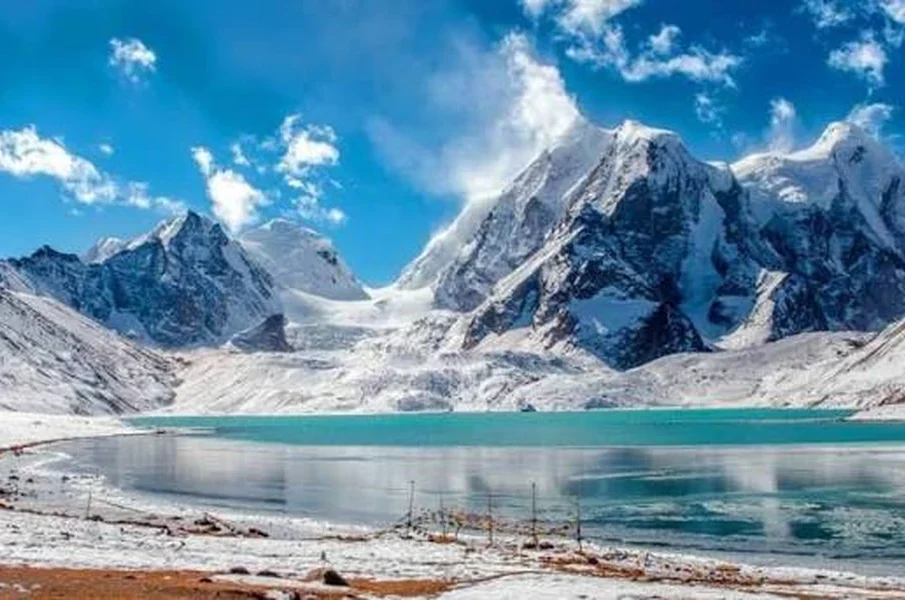
Sikkim in winter runs from December to February: dry, bright and cold, with the year’s clearest mountain views. Gangtok is mild by day and near freezing at night, while the high passes and northern valleys get snow. Some famous spots shut for the season, so your dates and route matter.
What is the weather like in Sikkim in winter?
Winter is Sikkim’s driest, brightest spell. Gangtok, at about 1,650 m, runs around 14 degrees C by day and 1 degree C at night in December, with almost no rain. The city itself rarely sees snow.
Height changes everything. Tsomgo Lake, Nathu La and the Lachung and Yumthang area fall below freezing, and the far north is brutal: Lachen and Lachung valleys sit around minus 5 to minus 15 degrees C, and Gurudongmar can touch minus 20 to minus 30 degrees C. Snowfall between December and February is common at altitude and can close roads for a day or more. Pack serious cold-weather gear, not a light fleece.
Where can you actually see snow in Sikkim?
For a near-certain chance of snow between late December and February, head high. Tsomgo Lake and Nathu La on the east road, the Lachung and Yumthang belt in the north, and the Zuluk loop on the old Silk Route all gather snow. Yumthang often has a clean white cover in January.
One honest warning. On heavy-snow days the administration cancels Tsomgo and Nathu La permits at short notice for safety, and you may lose the day with little or no refund. Keep a spare day and do not book the snow leg for your last morning.
What stays open, and what closes in winter?
The east road to Tsomgo Lake and Baba Mandir usually stays open, with weather closures. Nathu La runs Wednesday to Sunday for Indian citizens, but shuts whenever snow blocks the pass.
North Sikkim reopened to tourists in September 2026 after nearly three years, so Lachen and Lachung are reachable this winter. Higher up it gets uncertain. Yumthang is weather-dependent, Zero Point is frequently closed, and Gurudongmar Lake is shut most of the time through deep winter as the lake and the road ice over. If Gurudongmar is the whole point of your trip, winter is the wrong season.
| Place | Altitude | Winter status |
|---|---|---|
| Tsomgo (Changu) Lake | about 3,753 m | Usually open; permit cancelled on heavy snow |
| Nathu La | 4,310 m | Wed to Sun, Indian citizens only; closes on snow |
| Lachung | about 2,700 m | Open; valley base for the north |
| Yumthang Valley | about 3,564 m | Open but weather-dependent |
| Zero Point | about 4,660 m | Frequently closed |
| Gurudongmar Lake | 5,430 m | Mostly closed in deep winter |
Do I still need permits in winter?
Yes, the permit rules do not change with the season. Indian citizens need a Protected Area Permit for Tsomgo, Nathu La and all of North Sikkim, and for North Sikkim and Nathu La that permit is arranged only through a registered Sikkim travel agent, not by a walk-in traveller. Foreign nationals need an entry permit, the Inner Line Permit, to enter Sikkim, and are barred from Gurudongmar, Zero Point and Nathu La in any season.
Which festivals happen in Sikkim in winter?
Winter is the state’s richest run of Buddhist festivals. Losoong, the Sikkimese New Year that the Lepchas call Namsoong, falls on 9 to 13 December 2026, with Black Hat dances and archery. Just before it, monasteries such as Rumtek and Phodong hold the Kagyed masked dance in late December. Losar, the Tibetan New Year, arrives later, in February or March. Gangtok also fills up over Christmas and New Year, so book rooms early for late December.
Dos and don’ts for a winter trip
Do:
- Book early. Late December to early January is peak season and rooms fill fast.
- Carry real winter gear: an insulated jacket, thermals, gloves and a warm cap for the high days.
- Check road and permit status the evening before any high-altitude run, through your operator.
- Keep one or two buffer days so a snow closure does not end your trip plan.
Don’t:
- Do not build a deep-winter trip around Gurudongmar or Zero Point; both are usually shut.
- Do not drive north late. Tourist vehicles must cross the Toong check post by 4 pm.
- Do not treat the cold or the altitude lightly; anyone with a heart or respiratory condition should speak to a doctor before a high leg.
- Do not expect snow in Gangtok city. For snow you must go up to the passes or the north.
FAQ
Is winter a good time to visit Sikkim?
Yes, if you want clear skies, snow at altitude and festivals rather than green valleys. December to February is dry and bright, with sharp mountain views. The cost is hard, cold at night, occasional road closures from snow, and several northern spots shut for the season. Plan the route around what stays open.
Does it snow in Gangtok in winter?
Rarely. Gangtok sits at about 1,650 m and usually stays dry and cold rather than white, around 14 degrees C by day and near freezing at night. For reliable snow you go higher: Tsomgo Lake, Nathu La, the Lachung and Yumthang belt, or the Zuluk loop, mostly from late December through February.
Is Nathu La open in winter?
Nathu La stays open to Indian citizens on Wednesday to Sunday through winter, but closes whenever heavy snow blocks the pass, sometimes at a few hours’ notice. The permit is arranged through a registered Sikkim agent. Foreign nationals are not allowed at Nathu La in any season. Keep a spare day in case the road shuts.
Can you visit Gurudongmar Lake in December or January?
Usually not. At 5,430 m the lake and the approach road ice over, and Gurudongmar is shut for most of the deep winter. Lachen and Lachung valleys stay reachable, and Yumthang is open on good-weather days, but a trip built around Gurudongmar is better kept for spring or autumn.
How cold does Sikkim get in winter?
Gangtok is manageable, about 14 degrees C by day and 1 degree C at night. It gets far colder with height. The northern valleys sit around minus 5 to minus 15 degrees C, and Gurudongmar can reach minus 20 to minus 30 degrees C with wind. Carry layered, insulated clothing and proper gloves.
What should I pack for Sikkim in winter?
Layer up. A windproof insulated jacket, thermal base layers, a fleece, warm gloves, a cap and sturdy shoes with grip for icy patches. Carry a power bank, as cold drains batteries, plus lip balm and moisturiser for the dry air. Cash matters too, since ATMs thin out beyond Gangtok and vanish in the north.
To know more information about planning Sikkim in winter, check out sikkimtourism.org